
NFPA 259: A Comprehensive Overview (2023 Edition)
NFPA 259, a National Fire Protection Association standard, details the Standard Test Method of Potential Heat of Building Materials, available as a PDF.
NFPA 259, published by the National Fire Protection Association, is a crucial standard for assessing the fire behavior of building materials. The 2023 edition, available in PDF format, outlines a standardized test method to determine the “potential heat” released when a material burns under controlled laboratory conditions. This information is vital for fire safety, code compliance, and material selection in construction.
The standard is essential for various professionals, including those in fire test labs, manufacturers of building products (like foam sheathing), fire protection engineers, and researchers. Understanding the potential heat release helps evaluate a material’s contribution to fire growth and informs appropriate fire protection strategies. Accessing the official NFPA 259 PDF ensures adherence to the latest requirements and best practices.
Purpose and Scope of the Standard
The primary purpose of NFPA 259, as detailed in the National Fire Protection Association’s PDF document, is to establish a consistent methodology for measuring the potential heat released by building materials during a fire. This standardized test method allows for a comparative assessment of different materials’ contributions to fire growth.
The scope encompasses defining the necessary test apparatus, specifying preparation requirements for test specimens, and outlining the procedures for conducting the oxygen bomb calorimeter test. NFPA 259 doesn’t directly address surface burning characteristics (covered by NFPA 286), but provides foundational data for comprehensive fire risk analysis. It’s crucial for manufacturers seeking code compliance and ensuring product safety.
Target Audience for NFPA 259
The NFPA 259 standard, available as a PDF from the National Fire Protection Association, is essential for a diverse group of professionals. Primarily, fire test labs rely on it for conducting accurate potential heat release measurements. Fire protection engineers utilize the data for building code compliance and fire risk assessments.
Furthermore, foam sheathing manufacturers need to adhere to NFPA 259, often in conjunction with NFPA 285, to demonstrate product safety. Fire researchers also benefit from the standardized methodology. Anyone involved in building material evaluation, fire safety design, or regulatory oversight will find the NFPA 259 document invaluable.
Understanding the Standard Test Method
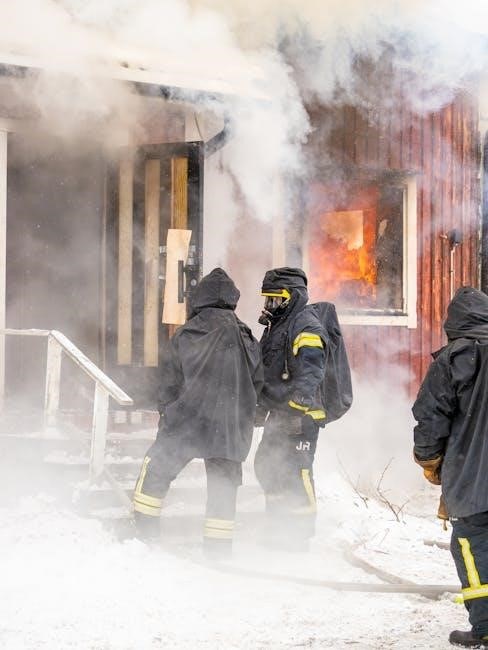
NFPA 259, a National Fire Protection Association PDF, establishes a controlled laboratory method to determine the potential heat release of building materials.
Potential Heat of Building Materials: Definition
Potential Heat of Building Materials, as defined within the NFPA 259 standard – available as a National Fire Protection Association PDF – represents the total heat released when a material undergoes complete combustion. This crucial metric, determined through a rigorous oxygen bomb calorimeter test, isn’t simply about flammability. It quantifies the total energy a material can contribute to a fire, influencing fire growth and spread.
The NFPA 259 test method provides a standardized way to measure this potential, offering a consistent basis for evaluating building material contributions to fire scenarios. Understanding this value is paramount for fire safety engineers and code officials, informing material selection and building design to mitigate fire hazards. The PDF document details the precise methodology for accurate assessment.
Importance of Determining Potential Heat
Determining the Potential Heat of building materials, as outlined in the NFPA 259 standard – accessible as a National Fire Protection Association PDF – is critically important for comprehensive fire risk assessment. This value directly impacts fire modeling and the prediction of fire behavior within structures. Accurate data allows for the development of effective fire protection strategies and appropriate building codes.
Understanding a material’s heat release potential, measured via the NFPA 259 test method, aids in selecting materials that limit fire growth and minimize structural damage. This is particularly vital for foam sheathing manufacturers needing NFPA 285 compliance. The PDF provides the necessary framework for ensuring building safety and regulatory adherence.
Controlled Laboratory Conditions
NFPA 259, detailed in the National Fire Protection Association’s PDF document, mandates precise Controlled Laboratory Conditions for accurate Potential Heat measurement. The standard specifies exact parameters for temperature, humidity, and airflow to eliminate external variables influencing test results. This rigorous control ensures repeatability and reliability of data, crucial for code compliance and material evaluation.
These standardized conditions allow for a fair comparison of different building materials’ heat release characteristics. The PDF outlines specific requirements for the test apparatus and specimen preparation, guaranteeing consistency across testing facilities. Maintaining these controls is paramount for obtaining valid data used by fire protection engineers and manufacturers.
Key Components of the NFPA 259 Test
The NFPA 259 test, outlined in the National Fire Protection Association PDF, involves specific apparatus, specimen preparation, and oxygen bomb calorimeter procedures.
Test Apparatus and Materials
NFPA 259, as detailed in the National Fire Protection Association’s PDF document, requires a precise setup for accurate potential heat determination. The core of the test relies on an oxygen bomb calorimeter – a robust vessel designed to withstand high pressures during combustion.
Essential materials include the test specimen itself, carefully prepared according to standard requirements, and a sufficient quantity of oxygen to facilitate complete combustion within the calorimeter. The apparatus also incorporates temperature sensors to meticulously monitor the heat release throughout the process. Calibration standards are crucial for ensuring the calorimeter’s accuracy and reliability, providing a benchmark for consistent results. Proper functioning and maintenance of all components are paramount for valid data.
Test Specimens: Preparation and Requirements
The NFPA 259 standard, outlined in the National Fire Protection Association’s PDF, specifies rigorous specimen preparation. Samples must be representative of the material being evaluated, typically involving multiple specimens to account for inherent variability.
Dimensions are precisely defined, ensuring consistent surface area-to-volume ratios. Specimens should be conditioned to a consistent moisture content, as water significantly impacts heat release. Preparation often involves cutting, shaping, and ensuring surfaces are free from debris. The PDF details acceptable tolerances for mass and dimensions. Proper documentation of specimen origin and preparation is vital for traceability and reliable test results, adhering to the standard’s strict guidelines.
Oxygen Bomb Calorimeter Test Procedures
As detailed in the NFPA 259 PDF from the National Fire Protection Association, the oxygen bomb calorimeter test is central to determining potential heat. A precisely weighed specimen is placed within a sealed, oxygen-filled bomb.
Ignition occurs via an electrical source, and the resulting temperature rise within the bomb is meticulously measured. This temperature change, coupled with known calibration factors, calculates the total heat released during combustion. The PDF outlines specific procedures for bomb calibration, specimen handling, and data analysis. Accurate measurements and adherence to the standard’s protocol are crucial for obtaining reliable potential heat values.

NFPA 259 and Related Standards
The NFPA 259 PDF connects to NFPA 286, surface burning tests, and impacts foam sheathing manufacturers regarding code compliance standards.
Relationship to NFPA 286
NFPA 259 and NFPA 286 are distinct yet complementary standards from the National Fire Protection Association. While NFPA 259, available as a PDF document, focuses on the potential heat release of building materials under controlled conditions, NFPA 286 assesses surface burning characteristics.
Understanding both is crucial for a comprehensive fire safety assessment. NFPA 286 evaluates how materials contribute to flame spread and smoke development during a fire, while NFPA 259 quantifies the total heat they could release. This relationship is particularly important for manufacturers, like those producing foam sheathing, needing code-compliant testing—often involving both standards—to demonstrate product safety.
Comparison with Surface Burning Characteristics Tests
NFPA 259, a National Fire Protection Association standard available in PDF format, differs significantly from surface burning characteristics tests like NFPA 286. Surface burning tests measure flame spread and smoke development – how a material behaves during a fire. Conversely, NFPA 259 determines the total potential heat a material could release if fully combusted.
This distinction is vital. Surface burning tests assess fire growth, while NFPA 259 quantifies the energy released. Both are essential for a complete fire risk analysis. One assesses the speed of fire spread, the other the intensity. Understanding both, detailed within their respective PDF documents, is crucial for fire safety professionals.
Impact on Foam Sheathing Manufacturers
The NFPA 259 standard, accessible as a PDF from the National Fire Protection Association, significantly impacts foam sheathing manufacturers. Compliance often necessitates demonstrating a material’s potential heat release, influencing product development and testing protocols. Many manufacturers require NFPA 285 testing alongside NFPA 259 to ensure code compliance.
Understanding NFPA 259’s requirements is crucial for producing code-compliant foam sheathing. The standard dictates testing procedures and acceptable heat release values. Manufacturers must invest in appropriate testing facilities or utilize accredited fire test labs. The PDF document provides detailed guidance, ensuring products meet stringent fire safety standards and market demands.
Document History and Updates
The NFPA 259 PDF was revised from the 2018 edition, with no current amendments or corrections as of May 4, 2022, per NFPA reports.
Revisions to NFPA 259 (2018 to 2023)
The transition from the 2018 to the 2023 edition of NFPA 259, available as a PDF from the National Fire Protection Association, involved key updates. While specific detailed changes require accessing the document itself, revisions generally focus on maintaining alignment with evolving fire safety standards and research.

Notably, updates address referenced standards, ensuring the test method remains current with best practices. Public comment resolutions, like SR-1-NFPA 259-2022, demonstrate a commitment to incorporating feedback from industry stakeholders. These revisions aim to enhance the accuracy and relevance of the potential heat determination process for building materials, impacting manufacturers and testing facilities alike.
Amendments and Corrections (Current Status)
As of today, February 3rd, 2026, the National Fire Protection Association’s NFPA 259 (accessed as a PDF) currently has no reported amendments or corrections. This indicates the 2023 edition is considered stable and accurately reflects the standard test method for potential heat of building materials.
However, users should regularly check the NFPA website for updates, as amendments can be issued to address clarifications or errors discovered post-publication. The absence of current corrections doesn’t preclude future revisions based on ongoing research or industry feedback, ensuring the standard remains a reliable resource for fire testing and code compliance.
Public Comment Resolutions (e.g., SR-1-NFPA 259-2022)
Reviewing public comment resolutions provides insight into the development of NFPA 259, the National Fire Protection Association’s standard available as a PDF. For instance, Resolution SR-1-NFPA 259-2022 addressed Public Comment No. 1-NFPA 259-2021, specifically Section D.1.2.1.
This resolution focused on updating referenced standards within the document, demonstrating the NFPA’s commitment to maintaining accuracy and relevance. These resolutions, documented in NFPA reports, detail the rationale behind accepting or rejecting proposed changes, offering transparency into the standard’s evolution and ensuring it reflects current best practices in fire safety testing.

Accessing and Utilizing NFPA 259
The NFPA 259 PDF document, from the National Fire Protection Association, is obtainable through subscription options or direct purchase via ANSI.
Obtaining the PDF Document
NFPA 259, the Standard Test Method of Potential Heat of Building Materials, is readily available in electronic Adobe Acrobat PDF format. You can directly acquire this crucial document from the National Fire Protection Association (NFPA) website.
However, access isn’t solely limited to direct purchase. Several subscription options exist, potentially offering cost savings if you require multiple NFPA standards. Furthermore, ANSI members often qualify for exclusive discounts, making the PDF more accessible.
Currently, NFPA 259 isn’t included within any pre-bundled packages, necessitating individual document acquisition. Be aware that while most standards are in PDF format, some ISO and IEC standards might be available in hard copy through Amazon.
Subscription Options and ANSI Member Discounts
While NFPA 259 – the Standard Test Method of Potential Heat of Building Materials – isn’t presently included in any comprehensive NFPA packages, exploring subscription options remains beneficial. These subscriptions can provide access to a wider range of standards, potentially offsetting the cost if you frequently utilize multiple NFPA documents.
A significant advantage exists for members of the American National Standards Institute (ANSI). ANSI membership often unlocks exclusive discounts on NFPA standards, including the PDF version of NFPA 259.
Investigating these options can lead to substantial savings, particularly for organizations requiring consistent access to the latest fire safety regulations and testing methodologies outlined in the document.
Document Format (Adobe Acrobat PDF)
The NFPA 259 – Standard Test Method of Potential Heat of Building Materials – is readily available for purchase and download in the universally compatible Adobe Acrobat PDF format. This ensures accessibility across a wide range of devices and operating systems, facilitating easy viewing, printing, and sharing of the document.
Purchasing through the ANSI Standards Store guarantees a digital copy, eliminating shipping costs and providing immediate access to the latest edition. While most standards are offered digitally, limited ISO and IEC standards are available in hard copy via Amazon.
The PDF format preserves the document’s integrity, ensuring accurate representation of all tables, figures, and technical details crucial for proper implementation of the standard.
Practical Applications and Considerations
NFPA 259 aids fire test labs, engineers, and researchers in evaluating building material heat release, ensuring code compliance via the PDF standard.
Fire Test Labs and NFPA 259
NFPA 259 is critically important for fire test laboratories as it provides the standardized methodology for determining the potential heat release of building materials. Access to the official National Fire Protection Association (NFPA) PDF document is essential for accurate testing and reporting.
Labs utilize this standard to generate data crucial for building code compliance and product certification. The test method, detailed within the PDF, outlines specific requirements for apparatus, specimen preparation, and oxygen bomb calorimeter procedures. Consistent application of NFPA 259 ensures reliable and comparable results across different testing facilities, supporting fire safety assessments and material approvals.

Fire Protection Engineers and Code Compliance
NFPA 259, available as a National Fire Protection Association PDF, is a vital resource for fire protection engineers ensuring building material safety. Engineers rely on data generated from NFPA 259 testing to demonstrate code compliance, particularly concerning fire resistance and heat release characteristics.
Understanding the standard’s methodology – detailed within the PDF – allows engineers to accurately assess fire hazards and design appropriate fire protection systems. It’s often referenced alongside NFPA 286 for comprehensive fire performance evaluation. Utilizing NFPA 259 data supports informed decision-making, contributing to safer building designs and protecting lives and property.
Errata and Updates: NFPA 259-2023 (NFPA 286 Reference)
The NFPA 259-2023 edition, accessible as a National Fire Protection Association PDF, includes recent errata addressing a critical reference to NFPA 286. A reported error highlighted an incorrect edition year for NFPA 286 within the standard’s documentation. This correction, detailed in official NFPA reports (like SR-1-NFPA 259-2022), ensures accurate application of the test method.
Users of the PDF document should consult the latest updates on the NFPA website to confirm they are utilizing the most current version. Maintaining accuracy in referenced standards is crucial for reliable testing and code compliance, particularly when evaluating building material fire performance.